This week’s reflection blog post is on the subject of using coding and computational thinking, and gaming in the classroom.
Scratch & Coding
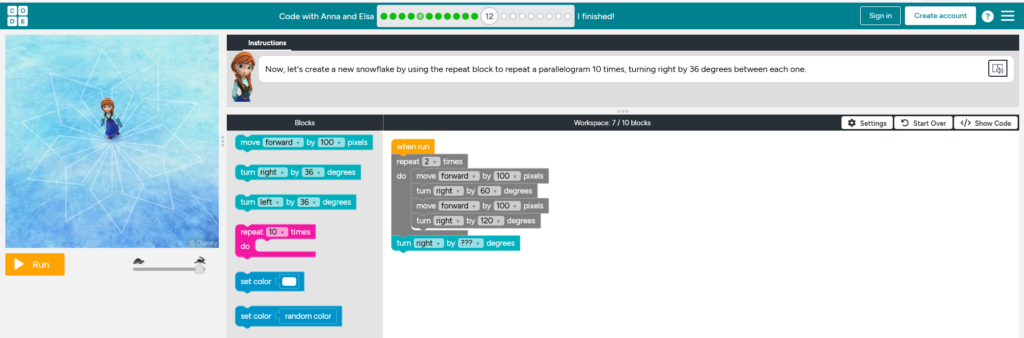
Above is a picture of the coding tool “Scratch” and my progress in a coding exercise. Using coding in the classroom seems to be an effective tool when it comes to presenting logical thinking. I can see the use in social studies as there are a lot of similar uses to computational thinking and historical thinking. Both have a lot of “if this than this” elements, and so there are many overlapping concepts and ideas.
I do think that there are also some major downsides to coding in the classroom. The use of coding is inherently one that can only be done with sufficient technology for the whole class, if you were to not have enough laptops it would be impossible for the whole class to complete the activity. In addition to the access, I’m not sure I think that encouraging students to code during a socials class really is the best use of the time, as students are spending more and more time on screens in other places, social studies is one of those times where it may be more beneficial to develop real social skills rather than online skills, such as coding.
Gaming In The Classroom
On the other hand, using board games or other kinds of serious games in the classroom, I think, can be a real benefit to both the teacher and students. Gaming can be a fantastic method of getting buy in from the students, as nowadays more students than ever play games as an outside of school hobby. Additionally, if serious games are used properly, the knowledge retained from learning through these games can increase dramatically,1 with students having much more engagement with the ideas, and getting to actually play with the concepts.
For non serious games, board games can be a fantastic alternative to coding to try and teach different kinds of thinking. For example, this thread of teachers who used board games in the class to teach physics is full of great ideas and ways that several different board games were used in classes.
On the other hand, not everyone should use games, and there are downsides to using games. If learning targets are not clear, students may not retain much of the information. Additionally, there is always the risk that students will get bored, as with any class, and if you have a larger than normal proportion of students who dislike games, than perhaps using a game in the classroom is not for you.
- Gundersen, Sindre & Lampropoulos, Georgios. (2025). Using Serious Games and Digital Games to Improve Students’ Computational Thinking and Programming Skills in K-12 Education: A Systematic Literature Review. Technologies. 13. 113. 10.3390/technologies13030113. ↩︎
